

No matter how satisfied your employees are at their current positions, chances are sooner or later they are going to be looking to progress with their career development within your organization or elsewhere. Numerous studies have demonstrated a direct correlation between employee development and job satisfaction and retention. That means if employees get an opportunity to develop their skills and move up the career ladder while working at your organization — they are more likely to stay.
The opposite is also true: if an organization fails to provide employees with a clear professional and career development perspective, that may eventually lead to lost motivation, decreased engagement, and increased employee turnover, putting a strain on your organization’s budget.
In this blog, we’ll guide you through why you should have a well-defined career path framework and how to create a career path for employees in 8 steps.
What is a Career Path Framework?
A career path framework (also referred to as a career progression framework or career growth framework) is a roadmap that outlines how employees can grow and progress with their career development within your organization. In its essence, a career path framework is a structured document that describes:
- Career levels, job titles, and responsibilities of each role
- Qualifications, competencies, and skills required for each career level
- Promotion criteria for advancing from one level to the next one
- Recommended training and certifications required for advancement
- Opportunities for both vertical and horizontal career growth
Building a career progression framework is an excellent way to boost engagement and retention and foster a positive workplace environment by providing clarity to employees about their perspectives of professional development and career advancement in your organization.
How to Develop a Career Path Framework for Employees in 8 Steps
Developing a career path framework might be a challenging, daunting, and time-consuming process, especially if you’ve never done it before. The good news is you don’t necessarily have to do it entirely from scratch. You can get inspiration from resources like progression.fyi that collects career development framework examples from some of the world’s leading employers, or get a ready-made career path framework template from paid resources.
1. Evaluate the Current State of Things
Firstly, take a closer look at your current organizational chart and see where it needs to be adjusted or changed to ensure it aligns with your company’s goals and objectives. Are there any gaps that need to be filled in your company’s organizational structure? Will creating new roles help streamline your business operations?
You might also want to gather feedback from your employees and managers through pulse surveys or one-on-one meetings where they can share their career goals, aspirations, and expectations. It will give you valuable ideas for creating a highly relevant career path framework that will serve the needs of your employees and your organizational goals alike.
2. Outline Career Levels, Titles, and Job Descriptions
Next, clearly outline your career levels and job titles and create detailed job descriptions. Will you stick to the standard hierarchy of career levels (Entry level → Individual Contributor → Manager → Director → Vice President → C-Suite), or does it make sense to have fewer levels in your organizational hierarchy at this point? How many job roles should be included within each career level?
While that will significantly vary based on the industry, organizational size, and a bunch of other variables, the key is to ensure each level remains meaningful and that advancing from one level to another isn’t merely symbolic — otherwise, it won’t make sense for employees and decrease their motivation to advance.
3. Identify Potential Career Moves (Vertical / Horizontal)
Obviously, not all employees are suitable for management positions, because they aren’t good at people management, don’t have the right skill set to thrive in managerial roles, or simply aren’t willing to. They may want to take a horizontal career move instead and keep perfecting their knowledge and skills within a more senior title of their current role. So, ideally, you should allow your employees to grow either vertically or horizontally:
- Vertical career growth — leads to a management role
- Horizontal career growth — leads to a senior title in the current role
4. Define Competencies and Promotion Criteria
Once previous steps are completed, you’ll need to outline all the competencies, skills, expertise, behaviors, and knowledge employees must possess to advance to the next level in their career path. That may include a certain level of education, a list of technical and soft skills, and specific performance targets employees are expected to meet.
You might also want to specify an average amount of time expected to pass at each role before moving to the next level. However, it may vary from employee to employee as some employees may be eligible to advance earlier based on their performance outcomes and accumulated experience.
5. Set Compensation Boundaries
While compensation may significantly differ between companies even within the same industry, it still makes sense to research the market rates when setting compensation boundaries for each role to ensure your company remains competitive as an employer in the labor market.
This way, when an employee is up for promotion, you’ll have an upper and lower limit to refer to when making a decision based on employee performance and competencies, which helps remove any potential bias.
6. Enhance Learning and Development Opportunities
Evaluate your currently available learning and development opportunities and see whether those are enough to support your employee development efforts and career growth. What training and learning courses are available to your employees at the moment? Are your employees given an opportunity to take external development courses where they can deepen their knowledge and skills? Do you provide individual coaching and mentoring?
Based on the identified gaps, enhance your training, coaching, and development offerings to ensure they sufficiently support each employee along their career journey within your company.
7. Roll Out the Framework to the Entire Organization
Once you’ve polished your career path framework, introduce it to your employees across departments and encourage them to take responsibility for their own professional development and growth within your organization. This process might be challenging at first as you will need to figure out how your current employees fit into the framework.
When rolling out your career progression framework for the first time, make sure everyone clearly understands the purpose behind building the framework and how it will work and benefit them in their career growth and development within your organization.
8. Consistently Revise and Adjust Your Career Path Framework
Rolling out your career progression framework is only the first step — keeping it relevant and aligned with your evolving business needs is an ongoing process that requires commitment and constant adaptation. You need to continuously evaluate, revise, improve, and adjust your framework to ensure it meets the needs of your employees and empowers your business growth.
Conduct regular performance reviews and one-on-one meetings to collect feedback from your employees and managers to assess how well your existing career path framework works and where inefficiencies are occurring and implement changes based on their feedback.
Why Should You Build a Career Path Framework at Your Company?
Let’s take a closer look at some of the specific benefits of developing a career path framework for your employees.
Helps Attract Top Talent to Your Company
Attracting top talent has always been challenging for businesses, considering the fact that today’s employees aren’t just looking for a paycheck and perks when exploring new job opportunities. A study by Workplace Intelligence revealed that nearly 9 out of 10 job seekers would appreciate it if their potential employer offered a skills development program and multiple career advancement opportunities.
Improves Engagement and Motivation
A Gallup survey found that development is one of the top drivers of employee engagement. Engaged employees are more emotionally invested in their jobs and are more motivated to do whatever it takes to achieve their professional development goals and move up to the next level of their careers.
Enhances Employee Productivity
Providing employees with career path development opportunities can be a true productivity booster because highly engaged employees aren’t just motivated by how they can progress within your organization — they are also more productive and more efficient, which can have a significant impact on your overall business performance.
Helps Retain Top-Performing Employees
Retaining top employees is one of the most significant benefits of having a career progression framework. A CareerAddict study found that a lack of progression is the number one reason people would quit their jobs. Meanwhile, LinkedIn Learning’s Workplace Learning Report found that 94% of employees say they would stay at a company longer if it invested in their learning and development.
Fosters an Employee-Centric Culture
When you provide employees with a clear career progression roadmap, it signals that you, as an employer, care about them and are willing to invest in their professional development and growth, which is the foundation for building and maintaining an employee-centric culture today’s employees have come to expect and appreciate.
Wrapping Up
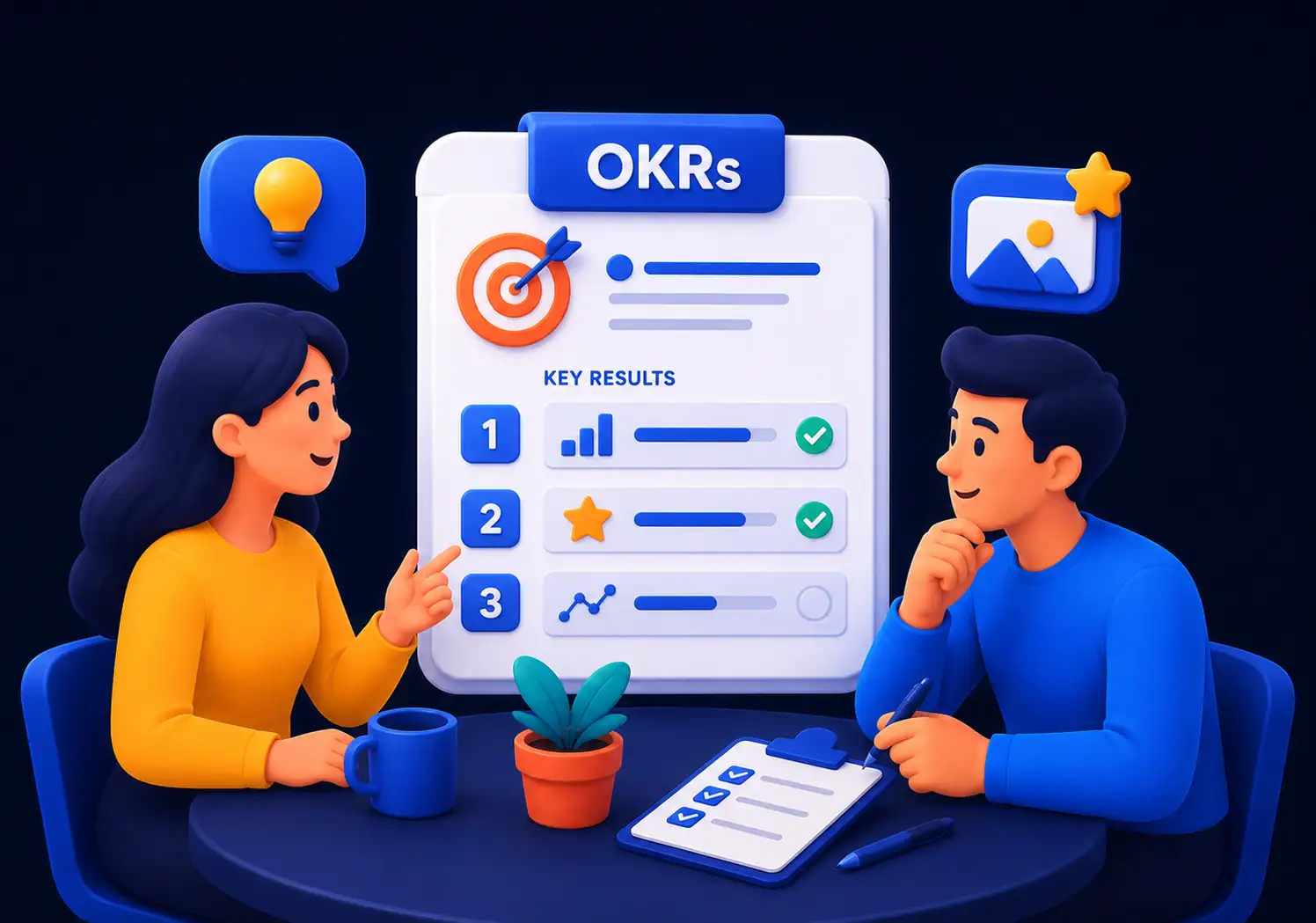
While having a clearly defined career progression framework is critical to keeping employees motivated and encouraging them to stay with your organization and develop their professional potential, it’s also important to maintain high levels of engagement by setting inspiring and ambitious goals that will guide their day-to-day activities. This is where a professional OKR management software like Effortbox can be a true game-changer.
With Effortbox, you can easily set Objectives and Key Results for your teams and manage your OKRs in a way that brings transparency, accountability, and better collaboration to keep your team members engaged, motivated, and inspired while fueling their professional growth and development.
Start for free now to see the OKR management tool in action.
 People management
  People management
  People management